
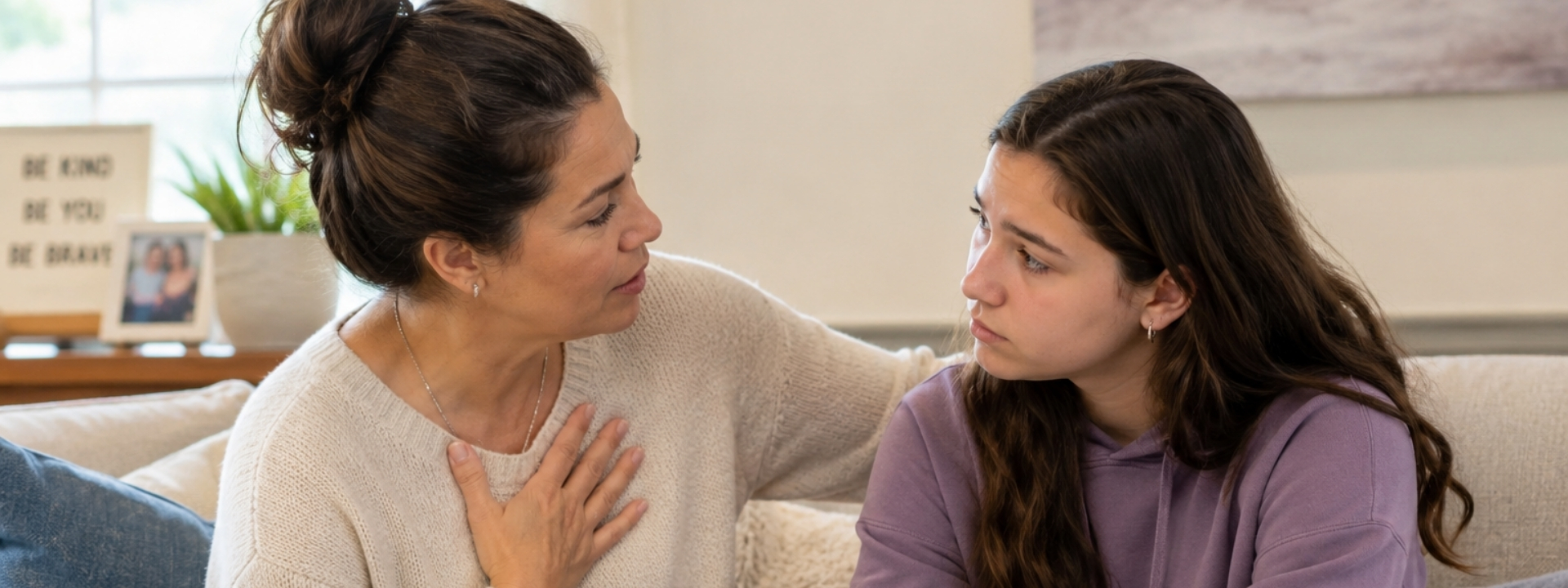
For a long time, I thought being a good mom meant constantly holding everything together.
I believed I needed to stay calm, have the answers, and keep control of the emotional temperature in our home. So when my teenage daughter, Sarah, and I argued, I usually focused on correcting her behavior instead of understanding what was happening underneath it.
One evening, after a particularly painful argument, I watched Sarah walk away with tears in her eyes and frustration written all over her face. And if I’m honest, part of me wanted to blame her disrespect and attitude for the breakdown between us.
But deep down, I knew something else was happening.
What hurt the most was realizing how familiar the moment felt—not because of my daughter’s behavior, but because of my own reaction. I heard the sharpness in my voice. I felt the defensiveness in my body. I recognized the emotional shutdown I had used as protection long before I ever became a mother.
That night, I sat with something uncomfortable: I had parented from my pain instead of from connection.
The next morning, I did something that once felt impossible for me. I apologized.
Not the kind of apology that explains away behavior or shifts blame. A real apology.
I told Sarah, “I was reactive yesterday, and I know my words hurt you. You didn’t deserve that. I’m still learning how to respond differently when I’m overwhelmed, and I’m sorry.”
I expected resistance or silence. Instead, I saw something soften in her face.
That moment changed our relationship—not because everything suddenly became perfect, but because trust started growing where fear and defensiveness used to live.
As parents, we sometimes think apologizing to our teens will weaken our authority. But I’ve learned the opposite can be true. Repair builds emotional safety. Accountability strengthens connection. And our children don’t need perfect parents nearly as much as they need emotionally honest ones.
Breaking generational cycles in parenting hasn’t looked like perfection in my home. It has looked like awareness, humility, emotional regulation, and choosing connection over control—one moment at a time.

Kathi Sohn helps mothers of adolescents heal emotional wounds from their own childhood so they can reconnect with their teens—without repeating the pain they grew up with. She is the creator of Cycle Breaker Pathways™ and the author of the award-winning book, “You Made It Up, Now Stop Believing It.” Through her mentorship and teachings, Kathi helps mothers understand the emotional patterns driving their parenting so they can respond with greater connection, awareness, and compassion. When you’re ready to break the cycle in your own life, you don’t have to do it alone.
